 BULLSTAR
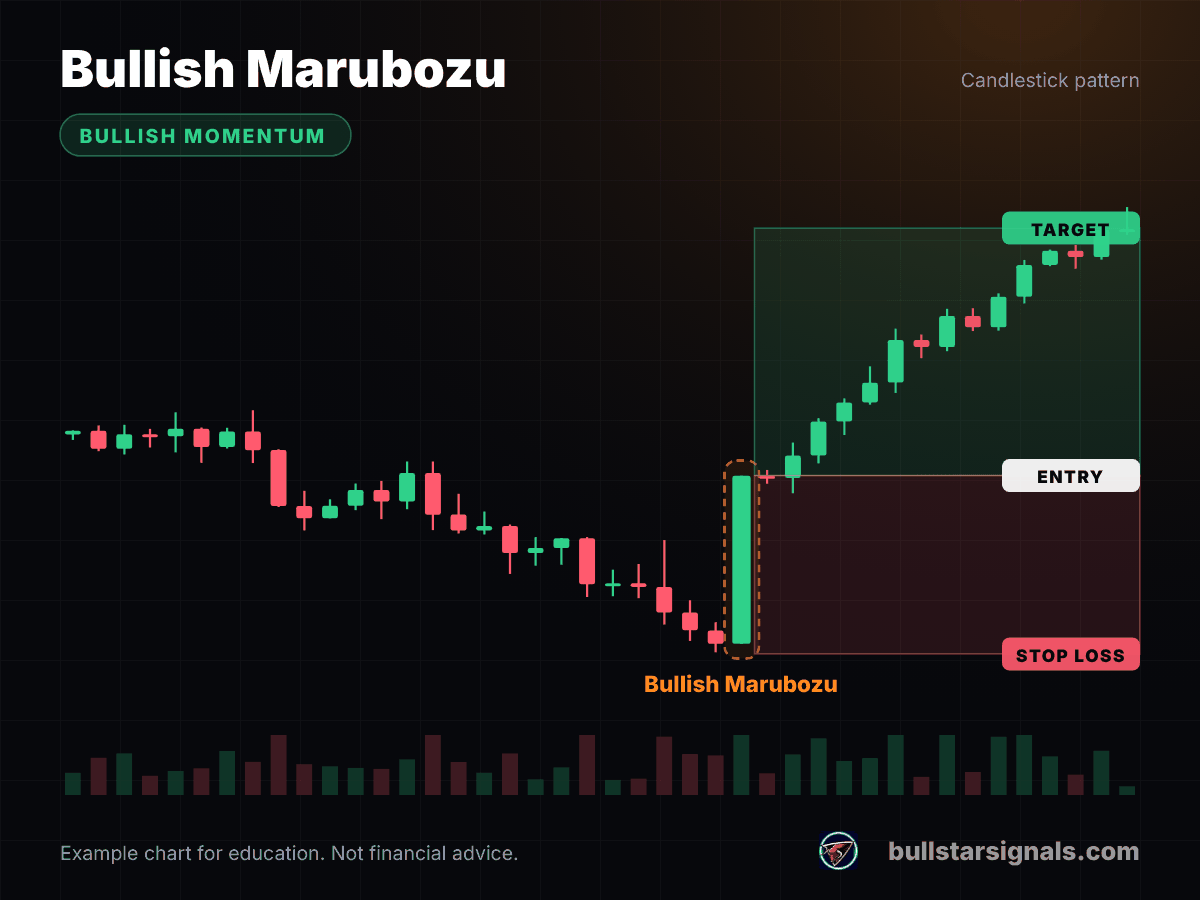
Bullish Marubozu Candlestick Pattern
A long green candle with no wicks. Buyers controlled the whole period, from open to close.
What is the Bullish Marubozu?
The Bullish Marubozu is a bullish candlestick pattern. A long green candle with no wicks. Buyers controlled the whole period, from open to close. It is a momentum signal, which shows one side took full control of a period.
A candlestick pattern on its own is a small piece of information. It becomes useful when it appears at a level that already matters, such as support, resistance or the edge of a chart pattern.
What it tells you about buyers and sellers
A full green candle with no wicks means buyers controlled price from the first second to the last. No dip was allowed below the open and price closed at the high.
How to trade it
Long on a small pullback after the candle.
Below the middle or the low of the marubozu.
At least twice the risk.
Size the position from the distance to the stop loss, so a loss costs only 1 to 2% of your account. See our position size guide and where to put a stop loss.
Example trade
Say ETH prints a 1-hour candle from 3,200 straight to 3,290 with no wicks. A long on a pullback to 3,260, stop at 3,240 below the middle of the candle, target near 3,300 and higher if momentum continues. This is a hypothetical example to show the method, not a real trade or a forecast.
Common mistakes
- Trading the candle in the middle of a range, away from any support or resistance.
- Acting before the candle has closed. The shape can change completely before the close.
- Using it on very low time frames, where single candles mean little.
- Skipping the stop loss because the signal "looks strong".
FAQ
Is the Bullish Marubozu bullish or bearish?
The Bullish Marubozu is bullish. It is a momentum signal. Price tends to move higher after it confirms, but no pattern works every time.
How reliable is the Bullish Marubozu in crypto?
We rate its reliability as medium. It works best on the 1H chart or higher and when volume confirms the move. Always use a stop loss, because patterns fail often in a market as volatile as crypto.
Where do you put the stop loss on a Bullish Marubozu?
Below the middle or the low of the marubozu.
The chart is an illustration for education. Not financial advice. Crypto trading carries a high risk of loss.
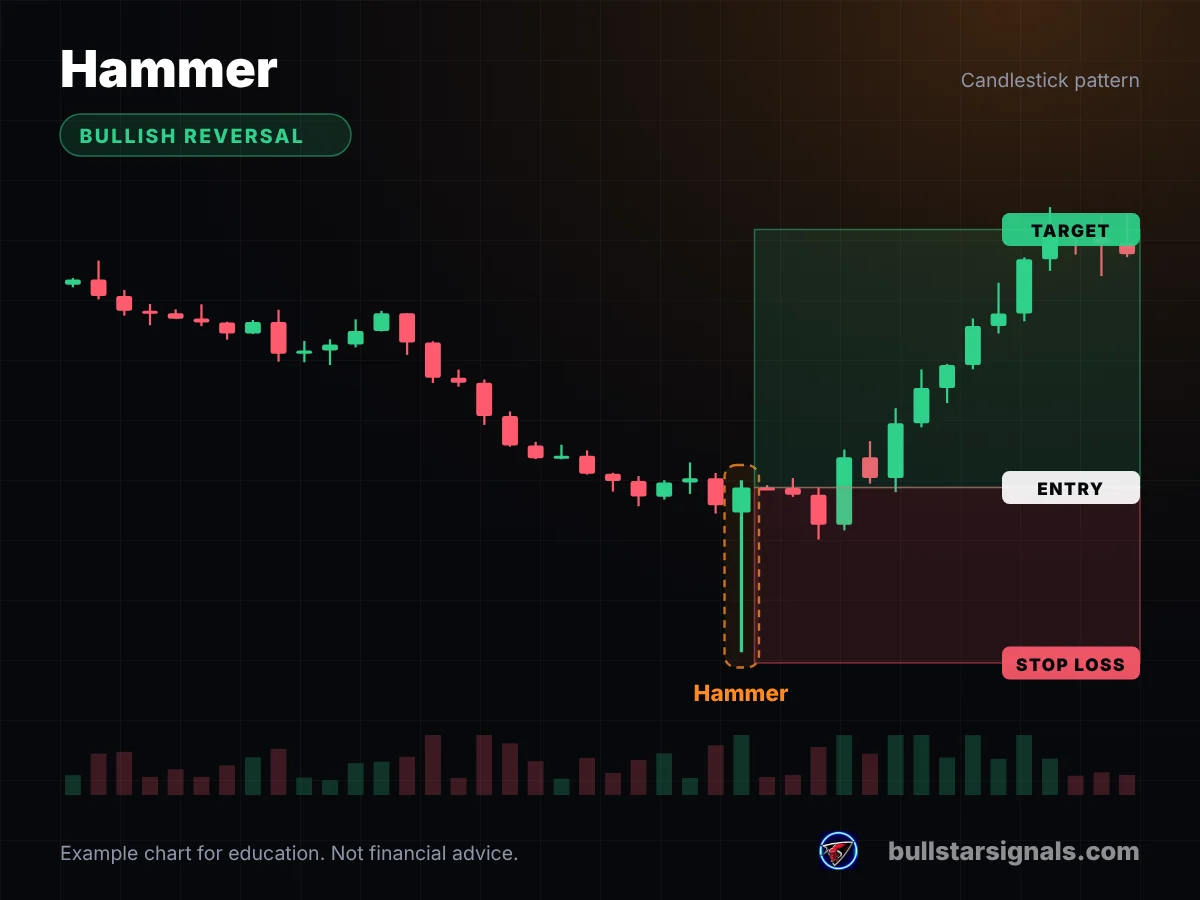 Hammer
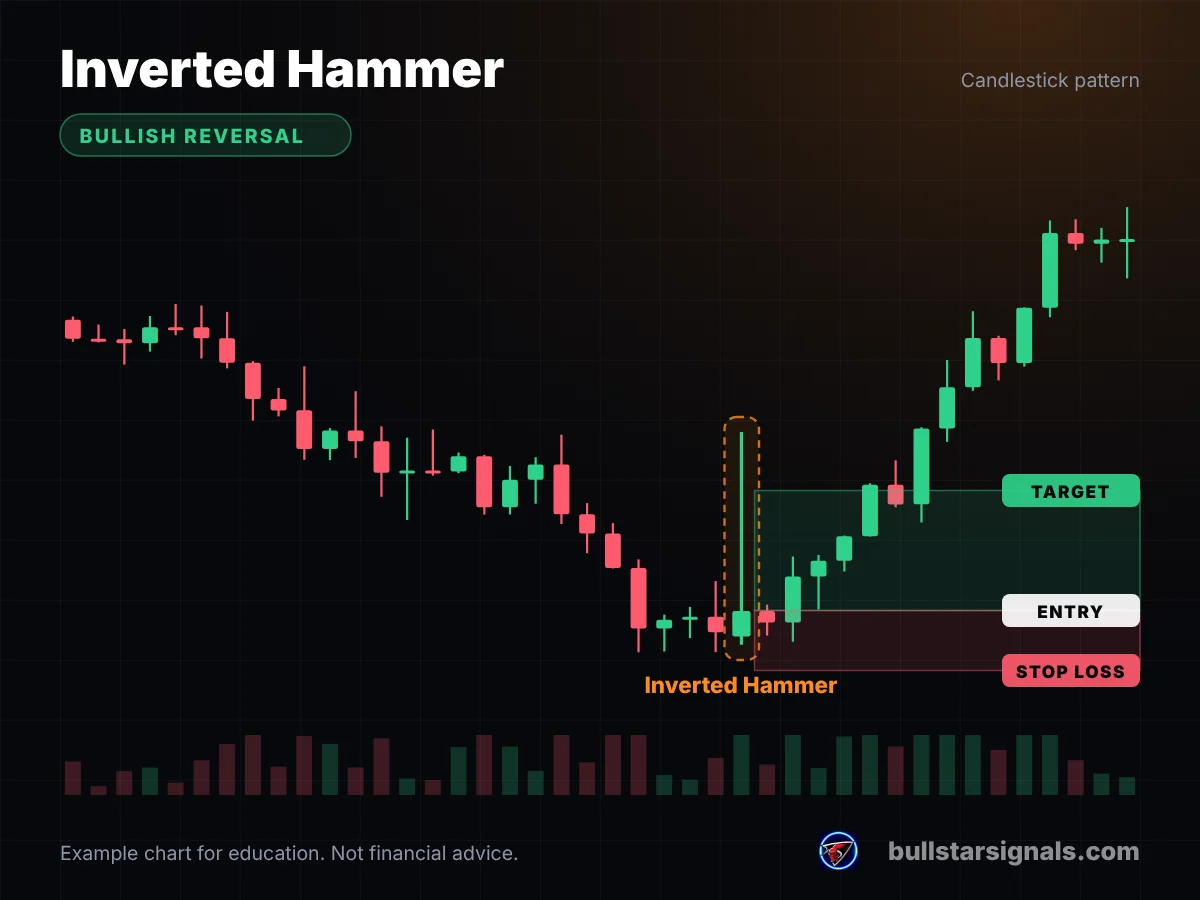 Inverted Hammer
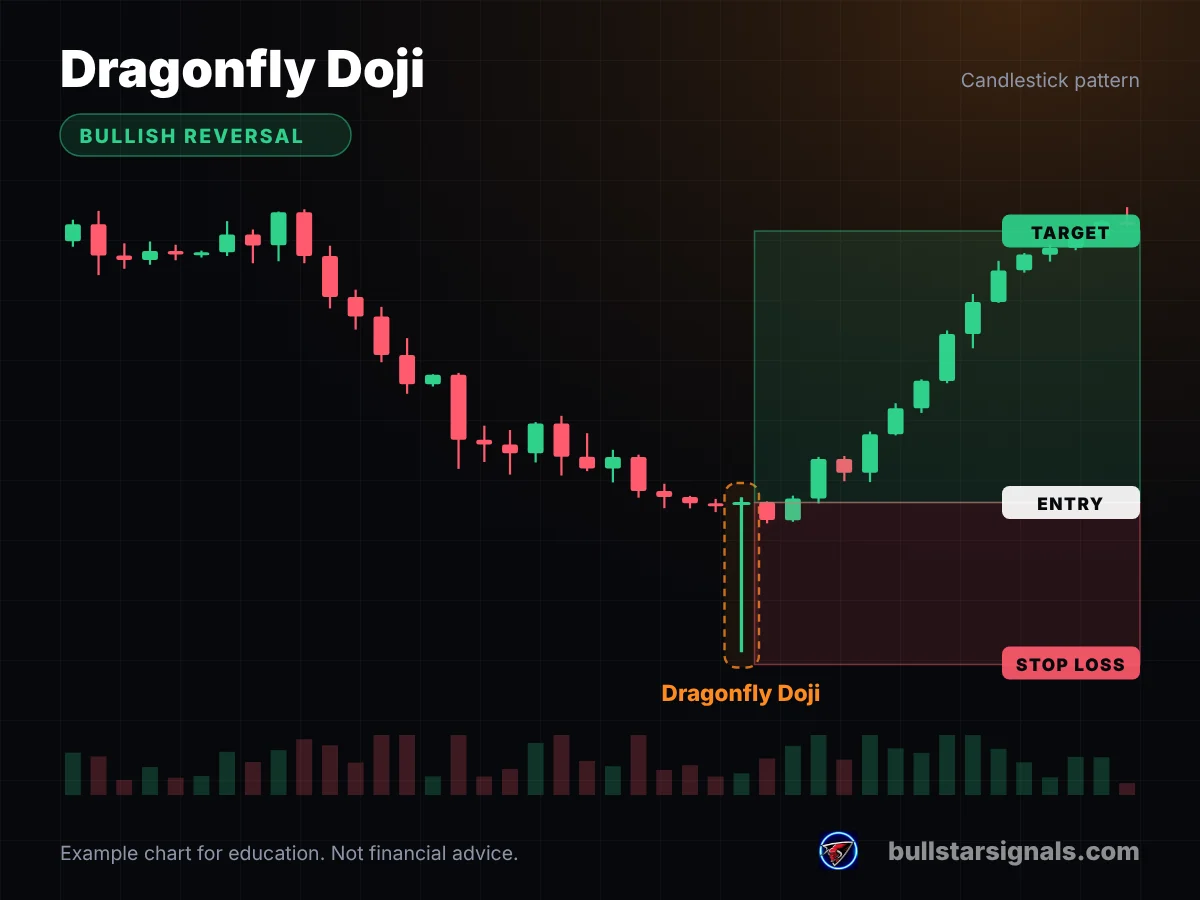 Dragonfly Doji
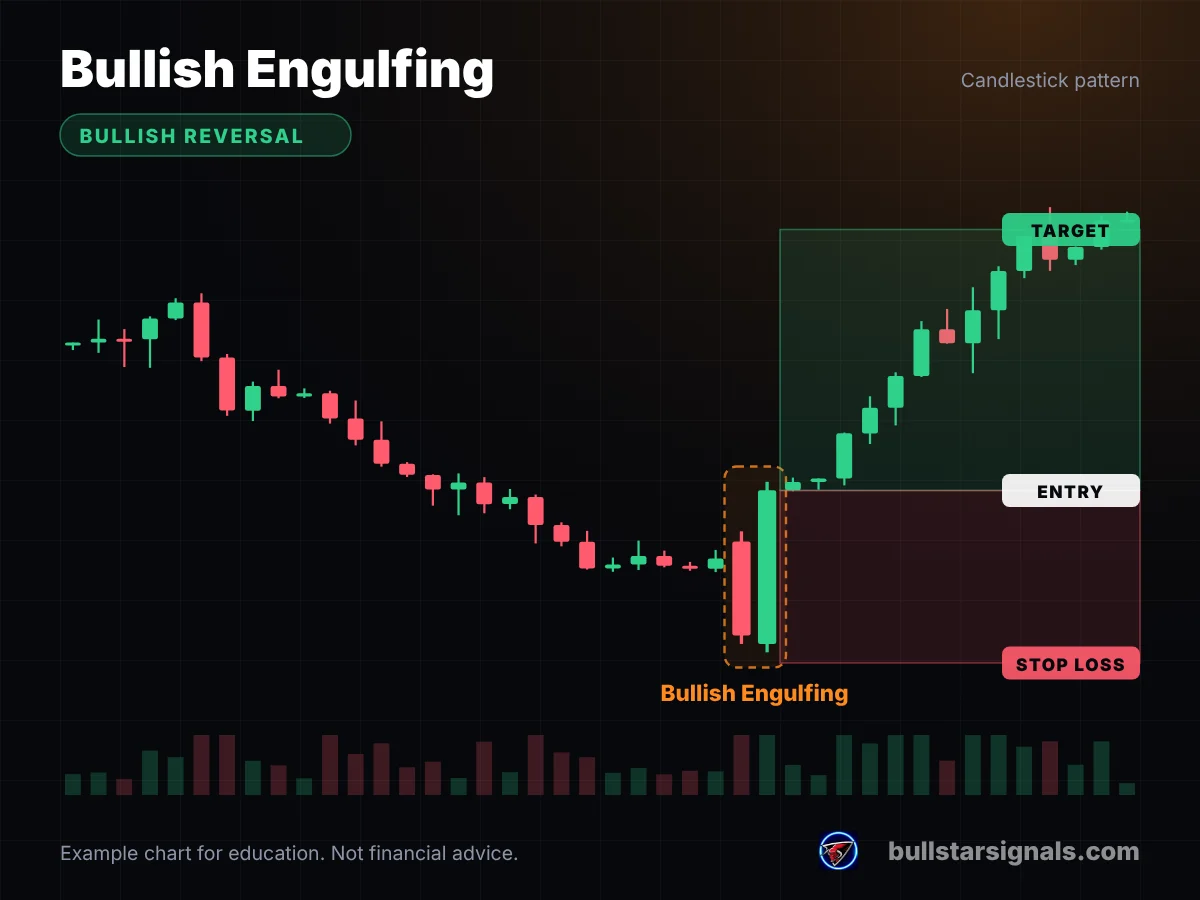 Bullish Engulfing